
 RU
RU
 UA
UA
Mitochondria — the main source of energy and youth of the organism
In recent years, mitochondria have become one of the most studied objects in regenerative medicine and anti-aging therapy. Modern research shows that the state of mitochondria is directly related not only to the level of energy, but also to the speed of aging, the functioning of the immune system, tissue repair, brain health, and life expectancy.
Mitochondria are present in almost every cell of the organism and are responsible for producing more than 90% of cellular energy in the form of ATP molecules. However, their role is much broader. They participate in the regulation of inflammation, tissue repair, protection of cells from damage, and control of aging processes.
Today many scientists consider mitochondrial dysfunction as one of the fundamental causes of age-related changes and development of chronic diseases.
What are mitochondria?
Mitochondria are intracellular organelles that convert nutrients and oxygen into energy necessary for the functioning of the organism.
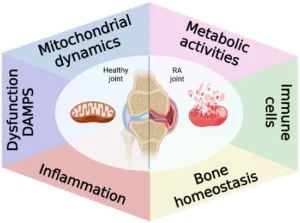
Main functions of mitochondria:
- production of cellular energy (ATP);
- regulation of metabolism;
- control of oxidative stress;
- participation in immune reactions;
- tissue repair;
- regulation of death of damaged cells;
- synthesis of important biologically active molecules.
A particularly large number of mitochondria is contained in:
- brain;
- heart;
- muscles;
- liver;
- immune cells;
- endocrine system.
That is why disorders of mitochondrial function affect almost all organs and systems of the organism.
How are mitochondria related to aging?
With age, the number and quality of mitochondria gradually decreases.
Research shows that after 30–35 years the efficiency of mitochondrial function begins to decrease. Mitochondrial DNA is damaged, energy production decreases, and the formation of free radicals increases.
This leads to the development of so-called mitochondrial insufficiency.
Consequences of age-related mitochondrial dysfunction:
- chronic fatigue;
- decreased physical endurance;
- impaired memory and concentration;
- decrease in muscle mass;
- accelerated skin aging;
- slower tissue repair;
- hormonal disorders;
- weakened immunity;
- increased risk of neurodegenerative diseases.
In essence, many signs of aging are a direct consequence of impaired mitochondrial function.
Role of mitochondria in the development of chronic diseases
Modern medicine increasingly considers mitochondrial dysfunction as one of the key mechanisms of chronic diseases.
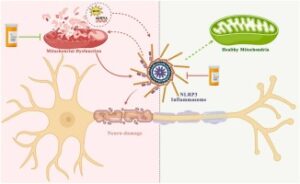
Among them:
Neurodegenerative diseases
- Parkinson’s disease;
- Alzheimer’s disease;
- age-related cognitive disorders.
Neurons consume a huge amount of energy, therefore they are especially sensitive to mitochondrial deficiency.
Cardiovascular diseases
The heart is one of the most energy-demanding organs. Impaired mitochondrial function contributes to the development of:
- heart failure;
- ischemic heart disease;
- age-related decline in cardiac function.
Metabolic diseases
Mitochondrial dysfunction is associated with:
- insulin resistance;
- type 2 diabetes mellitus;
- obesity;
- metabolic syndrome.
Chronic inflammatory processes
Damaged mitochondria can increase the production of pro-inflammatory molecules, maintaining chronic systemic inflammation — one of the main factors of aging.
Why mitochondria are considered a key target of anti-aging therapy?
According to the modern theory of aging, mitochondrial dysfunction is one of the main biological mechanisms of age-related changes.
Restoration of mitochondrial function allows acting on the root causes of aging, not only on its external manifestations.
Potential effects of optimization of mitochondrial function:
- increase in energy level;
- improvement of brain function;
- support of cognitive functions;
- increase in physical activity;
- acceleration of recovery after loads;
- improvement of skin condition;
- support of immunity;
- reduction of chronic inflammation;
- improvement of quality of life.
How does mitochondrial therapy work?
Mitochondrial therapy is aimed at restoring the energy potential of cells and improving their functional state.
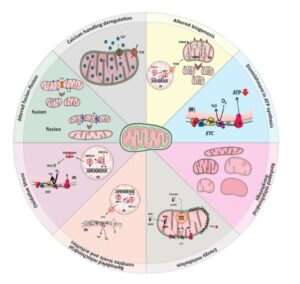
In our clinic a complex approach is used, including the use of active mitochondria obtained from mesenchymal stromal cells (MSC) and muscle cells.
These mitochondria have high metabolic activity and the ability to participate in cellular recovery processes.
Mechanism of cellular restoration
Potential mechanisms of mitochondrial therapy include:
Restoration of energy metabolism
Cells receive additional support for ATP production — the main source of energy.
Reduction of oxidative stress
Functional mitochondria help reduce accumulation of free radicals.
Support of tissue regeneration
Mitochondria participate in processes of restoration of damaged cells and tissues.
Improvement of intercellular communication
Modern research shows that mitochondria actively participate in cellular signaling and coordination of recovery processes.
Support of the immune system
Mitochondria influence the metabolism of immune cells and help maintain their normal function.
Mitochondrial therapy in our clinic
The program is selected individually after comprehensive patient diagnostics.
We use:
- active mitochondria obtained from mesenchymal stromal cells (MSC);
- active mitochondria from muscle cells;
- programs of mitochondrial function support;
- peptide preparations for home use;
- personalized patient management schemes.
A comprehensive approach allows acting both on cellular energy deficiency and on factors that accelerate aging of the organism.
Home mitochondrial support: the role of peptides
In addition to clinical procedures, an important component of the program may be preparations for home use.

Peptide complexes are aimed at supporting:
- cellular metabolism;
- mitochondrial activity;
- recovery processes;
- adaptation to stress;
- healthy aging.
The home program may be used as an addition to the main course of therapy and is selected individually by a specialist.
Basic mitochondrial therapy protocol
Stage 1. Diagnostics
An assessment is carried out of:
- general health condition;
- biological age;
- level of chronic inflammation;
- metabolic status;
- risk factors of accelerated aging.
Stage 2. Individual therapy plan
A personalized treatment and recovery program is formed.
Stage 3. Main course
May include:
- mitochondrial therapy;
- regenerative procedures;
- support of cellular metabolism;
- nutraceutical support;
- peptide complexes.
Stage 4. Maintenance program
Aimed at preserving achieved results and long-term support of mitochondrial health.
Limitations and important information
Despite high scientific interest in mitochondrial therapy, this field is still actively being studied.
It is important to understand:
- results are individual;
- speed of response depends on age and condition of the organism;
- therapy is not a guaranteed method of treatment of all diseases;
- maximum effect is achieved with an integrated approach including nutrition, physical activity, and medical supervision.
Mitochondrial therapy should be considered as part of a modern regenerative and preventive medicine program.
Conclusion
Mitochondria are the foundation of cellular health, energy, and longevity. Their state affects the functioning of the brain, heart, muscles, immune system, and the body’s ability to recover.
Modern scientific data confirm that maintaining and restoring mitochondrial function may become an important tool for prevention of age-related changes, fighting chronic diseases, and improving quality of life.
The use of active mitochondria from mesenchymal stromal cells and muscle cells combined with home support programs opens new opportunities for personalized anti-aging and regenerative medicine.


 " alt="loading" class="img-responsive"/>
 " alt="loading" class="img-responsive"/>
 " alt="loading" class="img-responsive"/>