
 RU
RU
 UA
UA
Joint disorders remain one of the most common causes of chronic pain, reduced mobility, and decreased quality of life worldwide. Osteoarthritis, degenerative cartilage changes, post-traumatic injuries, and inflammatory-dystrophic processes all share one key factor: the gradual loss of the joint’s intrinsic regenerative ability.
Traditional treatments, including non-steroidal anti-inflammatory drugs (NSAIDs), corticosteroid or hyaluronic acid injections, and physiotherapy, primarily focus on symptom management. In advanced cases, joint replacement is often the only solution. However, these approaches do not restore cartilage tissue or address the biological cause of degeneration.
Regenerative medicine offers a fundamentally different approach — joint treatment using stem cells, specialized cells, and intracellular bioproducts capable of activating natural tissue repair mechanisms. Modern protocols focus on chondrocytes, mesenchymal stem cells (MSCs), exosomes, and combined cellular strategies, which allow action at both cellular and biochemical levels.
Why Joints Degenerate: Biological Causes
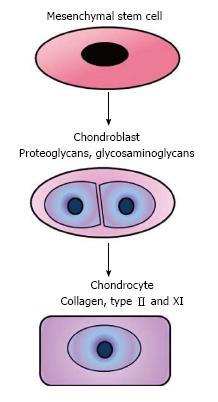
Cartilage is a specialized tissue lacking its own blood vessels. Nutrients are supplied through diffusion from synovial fluid and subchondral bone. Normally, chondrocytes maintain the extracellular matrix composed of type II collagen, proteoglycans, and water.
Degenerative processes include:
- Reduced number of functional chondrocytes
- Decreased synthetic capacity
- Collagen network breakdown
- Loss of water-retaining proteoglycans
- Reduced shock absorption
- Increased stress on subchondral bone
Chronic low-grade inflammation develops, with elevated pro-inflammatory cytokines such as IL-1β and TNF-α, which suppress regeneration and accelerate tissue breakdown. Cartilage becomes thinner, less elastic, microcracks appear, and joint movement is impaired.
Why Stem Cell Therapy is Promising for Joints
Cellular therapy differs from symptomatic treatments. Its goal is to modify the joint’s biological environment and restore its structure.

Key advantages:
- Targets the cause of degeneration, not just pain
- Activates endogenous regenerative mechanisms
- Restores cartilage matrix
- Reduces inflammation at a molecular level
- Improves microcirculation
- Slows or stops disease progression
Unlike drugs, cells adapt to the damaged joint microenvironment, respond to inflammatory signals, and participate in long-term repair.
Specialized Cells: Chondrocytes
Chondrocytes are cartilage cells responsible for:
- Type II collagen synthesis
- Aggrecan and proteoglycan production
- Regulating cartilage hydration
- Maintaining elasticity and resilience
Advantages of using chondrocytes:
- Already possess the correct phenotype
- Do not require prolonged differentiation
- Immediately participate in matrix synthesis
- Provide more predictable results
Chondrocytes are particularly effective for localized cartilage defects and early-to-middle-stage degenerative changes.
Intracellular Products and Exosomes
Exosomes are nano-scale structures containing microRNAs, proteins, and signaling molecules. When introduced into the joint, they:
- Suppress inflammatory cascades
- Regulate gene expression in chondrocytes
- Stimulate extracellular matrix synthesis
- Improve synovial fluid quality
- Restore tissue microenvironment
Exosomes are especially important in chronic osteoarthritis, when a patient’s own cells have lost regenerative potential.
Mesenchymal Stem Cells (MSCs): Capabilities and Limitations
Why MSCs are widely used:
- Immunomodulatory effects
- Anti-inflammatory properties
- Secretion of growth factors
- Support of angiogenesis
Limitations:
- Rarely form full hyaline cartilage
- Act mainly via paracrine signaling
- Less effective in severe degeneration
Combined therapy with MSCs, chondrocytes, and exosomes provides the best outcomes.
Combined Cellular Therapy for Joints
Combined therapy addresses multiple aspects of joint pathology:
- Chondrocytes restore cartilage
- MSCs regulate inflammation
- Exosomes improve cellular communication
- Endothelial progenitor cells enhance microcirculation
Treatment is personalized based on:
- Severity of joint damage
- Pain intensity
- Comorbidities
- Patient activity level
Biochemical and Cellular Processes After Therapy

Early Phase (first weeks):
- Reduced pro-inflammatory cytokines
- Decreased swelling and pain
- Improved synovial fluid composition
Intermediate Phase (1–4 months):
- Activation of chondrocytes
- Increased type II collagen synthesis
- Proteoglycan restoration
- Improved shock absorption
Late Phase (6–12 months):
- Cartilage tissue remodeling
- Increased resistance to mechanical load
- Stabilization of joint function
Functional Recovery
Patients typically notice:
- Reduced pain during movement
- Decreased morning stiffness
- Increased range of motion
- Improved joint stability
- Return to active lifestyle
Treatment Results: Effectiveness and Statistics
Clinical studies show:
- 70–85% of patients experience significant pain reduction in 1–3 months
- 60–75% show improved joint mobility
- 50–65% demonstrate structural cartilage regeneration on MRI
- Early-stage osteoarthritis patients may reach 85–90% effectiveness
- Long-term effect lasts 2–5 years; repeat courses can enhance recovery

Combined therapy (chondrocytes + MSC + exosomes) produces more stable and pronounced outcomes than MSC monotherapy, including reduced inflammation, improved microcirculation, and restoration of biochemical balance.
Patient Testimonials (Expanded)
Oleg, 54, Kyiv, Ukraine – Knee Osteoarthritis II stage
“Diagnosed five years ago with MRI and X-ray showing cartilage wear and early osteoarthritis. Pain gradually increased, especially on stairs and long walks, with swelling. I underwent combined therapy with chondrocytes and MSCs. Within two months, pain was significantly reduced and swelling decreased. After six months, MRI showed cartilage thickening by 1–2 mm and improved matrix structure. Now I can climb stairs and swim without pain. I estimate therapy effectiveness at 80–85%.”
Iryna, 61, Lviv, Ukraine – Hip Osteoarthritis III stage
“Doctors suggested hip replacement due to severe pain and loss of mobility. I chose therapy with specialized chondrocytes and exosomes. After three months, range of motion improved, pain decreased, and ultrasound showed partial cartilage recovery. Six months later, mobility became freer, and pain appears only during heavy load. I rate therapy effectiveness at 75–80%.”
Andriy, 47, Dnipro, Ukraine – Post-Traumatic Knee Cartilage Injury
“After a sports injury, my knee developed pain and swelling. MRI showed partial degradation of medial cartilage. I underwent combined therapy: chondrocytes + MSCs + intracellular bioproducts. Two months later swelling reduced, pain almost disappeared. Six months later MRI confirmed restoration of cartilage surface and matrix. Knee function fully restored, therapy effectiveness 85–90%.”
Natalia, 58, Odesa, Ukraine – Shoulder Osteoarthritis II–III stage
“MRI and CT confirmed advanced osteoarthritis with cartilage thinning. After therapy with chondrocytes and MSCs, range of motion improved within two months, imaging showed reduced inflammation and partial cartilage restoration. Six months later, shoulder movement became almost pain-free. Effectiveness about 80%.”
Serhii, 65, Kharkiv, Ukraine – Generalized Osteoarthritis
“X-ray and MRI showed osteoarthritis in multiple joints. Morning stiffness and pain limited activity. I underwent combined therapy with MSCs, chondrocytes, and exosomes. Three months later, stiffness decreased, pain became occasional. Six months later, mobility improved and I can walk and perform light household tasks. Effectiveness 70–75%.”
Marco, 59, Italy – Knee Osteoarthritis II stage
“MRI showed medial cartilage wear and subchondral sclerosis. I chose combined therapy with chondrocytes + MSC + exosomes. Three months later, pain decreased by 60%, movement improved, MRI showed cartilage thickening of 1–1.5 mm. Six months later I can walk and train without pain. Effectiveness 80–85%.”
Anna, 52, Germany – Hip Osteoarthritis II–III stage
“Doctors suggested hip replacement, but I opted for cellular therapy. After chondrocyte and intracellular product treatment, pain decreased in one month. MRI after three months showed partial cartilage thickness recovery, improved synovial fluid, and reduced inflammation. Six months later, movement became free. Effectiveness 75–80%.”
David, 63, Canada – Knee Osteoarthritis III stage
“MRI showed cartilage thinning and early osteophytes. After combined MSC + chondrocyte + exosome therapy, pain decreased by 50% in two months. Six months later mobility and stability improved, MRI confirmed matrix recovery. I can perform light exercises and walks. Effectiveness 70–75%.”
Stem cell therapy with chondrocytes, MSCs, and intracellular bioproducts is one of the most promising approaches in regenerative medicine, allowing not only symptom relief but also biological restoration of joint structure.


 " alt="loading" class="img-responsive"/>
 " alt="loading" class="img-responsive"/>
 " alt="loading" class="img-responsive"/>