
 RU
RU
 UA
UA
Why the Male Body Begins to Change After 40
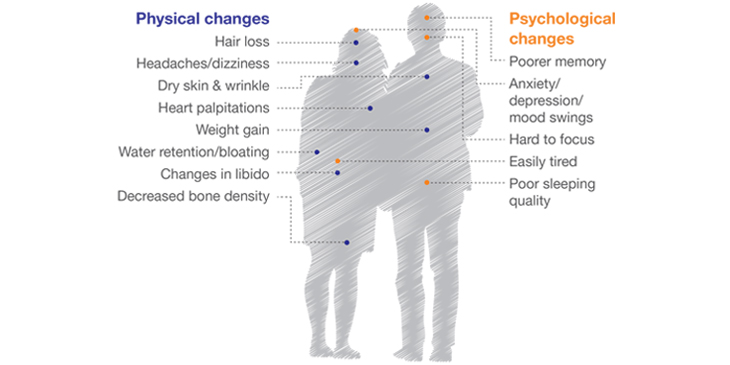
After the age of 40, the male body gradually enters a phase of age-related biochemical changes. Testosterone levels decrease, growth hormone production declines, tissue recovery slows down, and cellular sensitivity to insulin worsens. Against this background, men may notice reduced energy, poorer sleep quality, weight gain, loss of muscle mass, decreased libido, and deterioration in emotional well-being. These processes develop gradually, which is why many perceive them as “normal fatigue” or the consequences of stress.
At the same time, the influence of chronic inflammation, oxidative stress, and micronutrient deficiencies increases. Constant nervous tension, a sedentary lifestyle, lack of sleep, poor nutrition, and elevated cortisol levels accelerate the aging process. The cardiovascular system, endocrine regulation, cognitive functions, and reproductive health become especially vulnerable. The body no longer recovers as quickly as it did at the age of 25–30.
This is why after 40 it is important not only to eliminate symptoms but also to support the body’s key systems in balance. It is necessary to monitor hormone levels, weight, sleep quality, vascular condition, muscle mass, mitochondrial function, and the level of chronic inflammation. Modern anti-aging medicine is aimed not only at extending lifespan but also at preserving a high quality of life, physical activity, sexual health, and mental clarity.
 What Aging Is at the Cellular Level
 What Aging Is at the Cellular Level
Aging does not begin with external changes but with the gradual deterioration of cellular function. Every cell in the body has a limited capacity for division and recovery. Over time, cells begin to renew more slowly, produce energy less efficiently, and lose the ability to fully perform their functions. One of the main mechanisms of aging is considered to be the shortening of telomeres — protective sections of DNA that decrease with every cell division.
Another important factor is mitochondrial dysfunction. Mitochondria are the energy stations of the cell responsible for energy production. With age, their efficiency decreases, cells begin to experience an energy deficit, and the body becomes fatigued more quickly. As a result, endurance decreases, concentration worsens, sleep problems appear, and physical activity declines.
Oxidative stress also increases with age — a process in which cells are damaged by free radicals. When antioxidant protection weakens, cellular membranes, proteins, and DNA begin to deteriorate. This accelerates tissue aging and worsens the condition of blood vessels, skin, muscles, and the nervous system. In addition, chronic low-grade inflammation develops, which is considered one of the key causes of age-related diseases.
Biochemical processes in the male body after 40 also change at the hormonal level. Testosterone, DHEA, melatonin, and growth hormone levels decline. Cells become less sensitive to hormonal signals, metabolism worsens, and the body’s ability to recover decreases. That is why modern anti-aging therapy works not only with the symptoms of aging but also with the deeper cellular mechanisms.
Why a Comprehensive Approach Is Important When Creating an Anti-Aging Program
Effective anti-aging therapy for men after 40 cannot be limited to one medication or procedure. Age-related changes affect the hormonal system, metabolism, blood vessels, nervous system, muscles, and cellular metabolism. Therefore, a modern anti-aging program is built comprehensively — influencing all key mechanisms of aging simultaneously.
Bioidentical Hormone Pellets: Restoring Hormonal Balance
One of the main areas of anti-aging therapy is the correction of hormonal deficiencies. Bioidentical hormone pellets help maintain stable hormone levels over a long period without sudden fluctuations. The most commonly used hormones are testosterone, DHEA, and oxytocin.
Testosterone plays a key role in maintaining male energy, libido, muscle mass, bone density, and emotional well-being. After 40, its levels gradually begin to decline, leading to chronic fatigue, fat accumulation, and reduced sexual activity. Bioidentical hormone therapy helps restore physical activity, increase motivation, and improve quality of life.
DHEA is a precursor to many hormones and affects the immune system, cognitive functions, and stress resistance. Oxytocin helps improve emotional well-being, sleep quality, trust, and psychological comfort. Comprehensive hormonal support allows the body to function more stably and physiologically.

Weight Loss: Bio Hormones and Peptides
After 40, men often face visceral obesity and slowed metabolism. Fat tissue begins to actively influence hormonal balance, increasing inflammation and worsening insulin sensitivity. Therefore, weight management becomes not only an aesthetic goal but also an important part of anti-aging therapy.
Modern weight loss programs include the use of bioidentical hormones and peptides that help accelerate metabolism, reduce appetite, improve lipid metabolism, and preserve muscle mass during weight loss. This approach allows weight reduction to occur physiologically and safely without harsh restrictions or loss of energy.
Working with Cellular Changes: Exosomes and Stem Cells
Cellular therapy is considered one of the most promising areas of anti-aging medicine. Exosomes contain biologically active molecules that help cells recover, reduce inflammation, and stimulate tissue regeneration. They improve intercellular communication and activate rejuvenation processes at a deep level.
Stem cells are used to restore tissues, improve regeneration, and slow age-related changes. Such methods can be applied to support joints, blood vessels, skin, muscle tissue, and overall body recovery. Cellular technologies work not superficially but at the level of internal regenerative processes.
AR Cells for Improving Libido and Potency
Age-related changes often affect male sexual health. Reduced testosterone, impaired microcirculation, and vascular changes can lead to decreased libido and erectile dysfunction. AR cell technologies are aimed at improving tissue regeneration and restoring the functional activity of the intimate area.

Such methods help improve blood supply, increase tissue sensitivity, and activate regenerative processes. As a result, potency improves, sexual activity increases, and men regain confidence in themselves.
Supporting Cognitive and Energy Functions
One of the main causes of age-related fatigue is reduced mitochondrial efficiency. When cells produce less energy, a person begins to experience weakness, decreased concentration, and memory deterioration. Therefore, anti-aging programs often include support for mitochondrial function.
For this purpose, mitochondrial complexes, antioxidant therapy, nutraceuticals, and placental complexes are used. They help improve cellular respiration, increase energy production, and reduce oxidative stress. During therapy, men often notice increased performance, improved cognitive function, and greater emotional stability.
Increasing Muscle Strength and Physical Endurance
After 40, gradual muscle mass loss — sarcopenia — begins. This affects not only appearance but also metabolism, energy levels, and overall health. Decreased muscle mass is directly associated with accelerated aging processes.
Comprehensive anti-aging therapy helps maintain muscle strength through hormonal correction, peptide therapy, protein support, and individually tailored physical activity. As a result, endurance improves, metabolism accelerates, and overall quality of life increases.
Creating an Individual Anti-Aging Program
Every anti-aging program should be developed individually. The body of a man after 40 has its own characteristics, hormone levels, genetic factors, chronic diseases, and lifestyle habits. Therefore, universal therapy protocols do not exist.
Before starting the program, a comprehensive diagnostic evaluation is performed, including medical history analysis, laboratory testing, assessment of hormonal profile, body composition, inflammation levels, and nutrient deficiencies. Patient complaints are also considered, such as low energy, weight gain, poor sleep, decreased libido, or cognitive decline.
Based on the obtained data, a personalized program is created, which may include hormone therapy, cellular technologies, peptides, nutraceutical support, nutrition correction, and physical activity adjustments. This approach makes it possible to influence not only the symptoms but also the root causes of age-related changes.

Results of Anti-Aging Therapy for Men After 40
Comprehensive anti-aging therapy helps improve overall well-being, increase energy levels, and restore physical activity. Men report improved sleep, reduced chronic fatigue, increased productivity, and greater emotional stability. The body begins to recover more quickly after physical exertion and stress.
Body composition also improves significantly: the amount of visceral fat decreases, muscle mass increases, and the condition of the skin and vascular system improves. Restoring hormonal balance positively affects libido, potency, and self-confidence.
The duration of the effect depends on age, lifestyle, the body’s initial condition, and adherence to medical recommendations. On average, the results of comprehensive anti-aging therapy last from several months to several years with ongoing support and regular monitoring of health indicators.


 " alt="loading" class="img-responsive"/>
 " alt="loading" class="img-responsive"/>
 " alt="loading" class="img-responsive"/>